
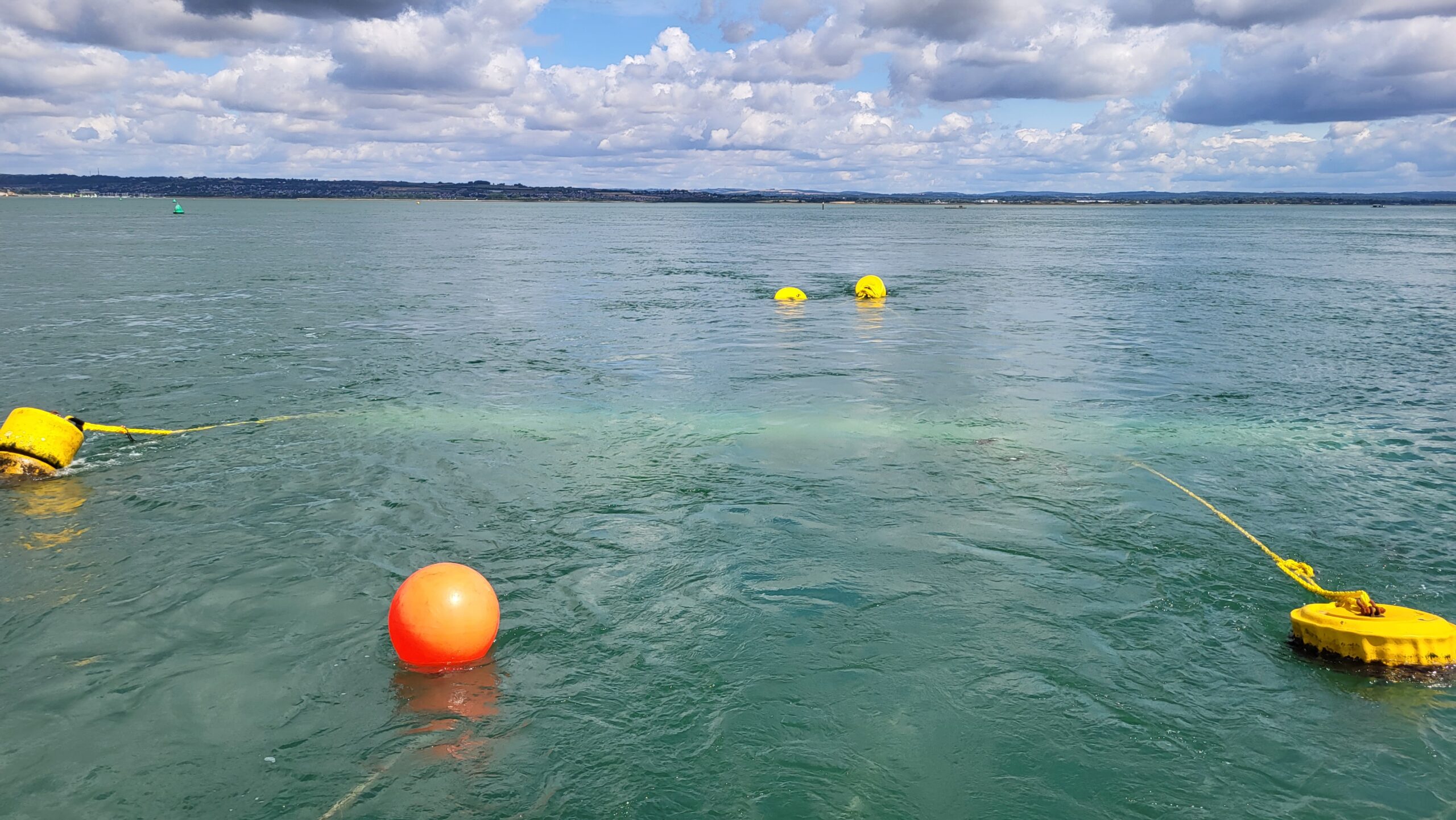
“Langstone Harbour is a shallow water lagoon next to Portsmouth with a strong tidal resource. It is easily accessed and is very sheltered water ideal for commissioning and testing a tidal power plant.”
Development of Our Digital Twin Including Environmental Impact Assessment in this Pristine Environment
Langstone Harbour Tidal Project
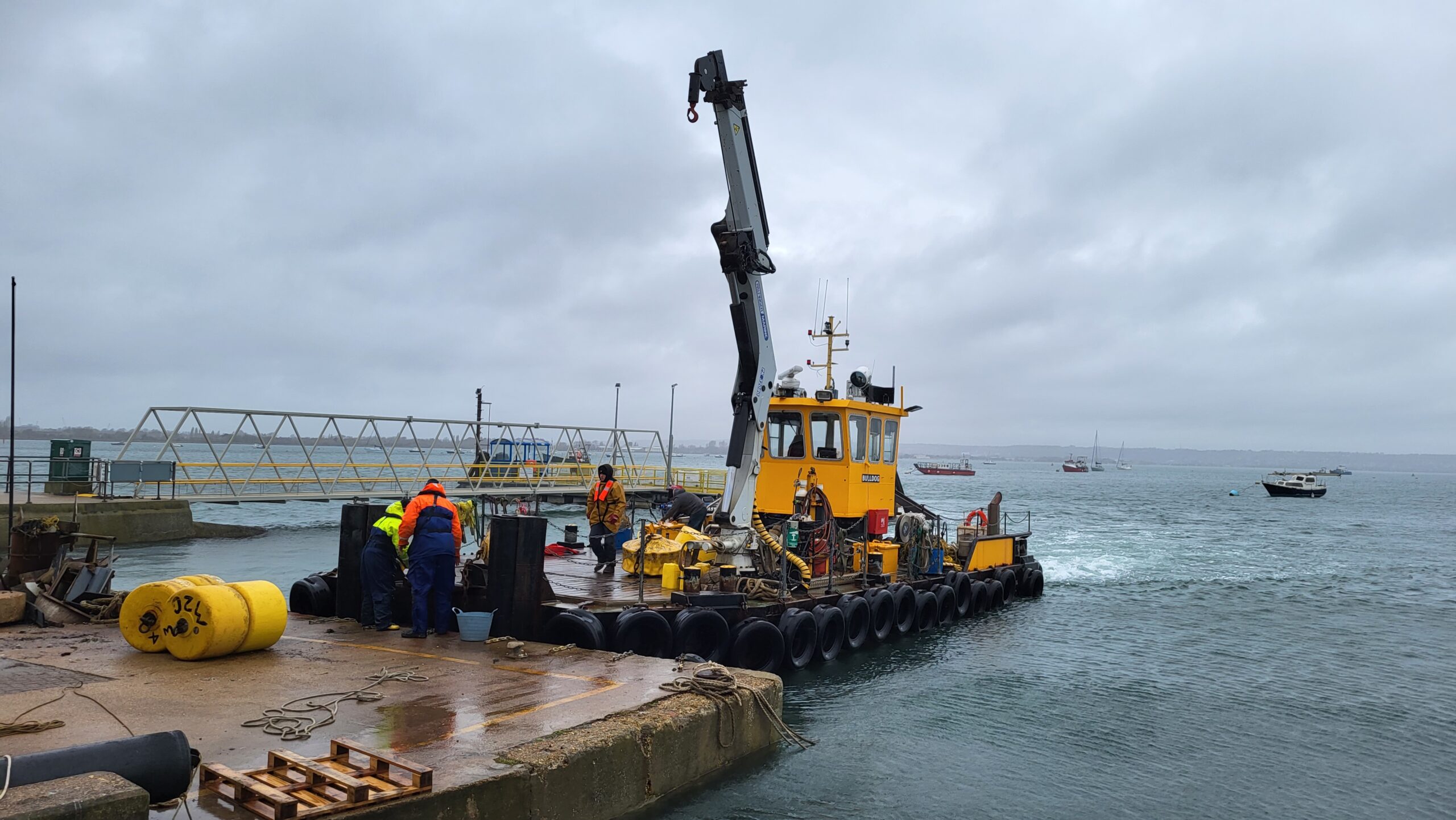
QED Naval has been using Langstone Harbour to update its operations and control systems, develop a full maintenance strategy, and carry out environmental impact assessements in this special protected area.
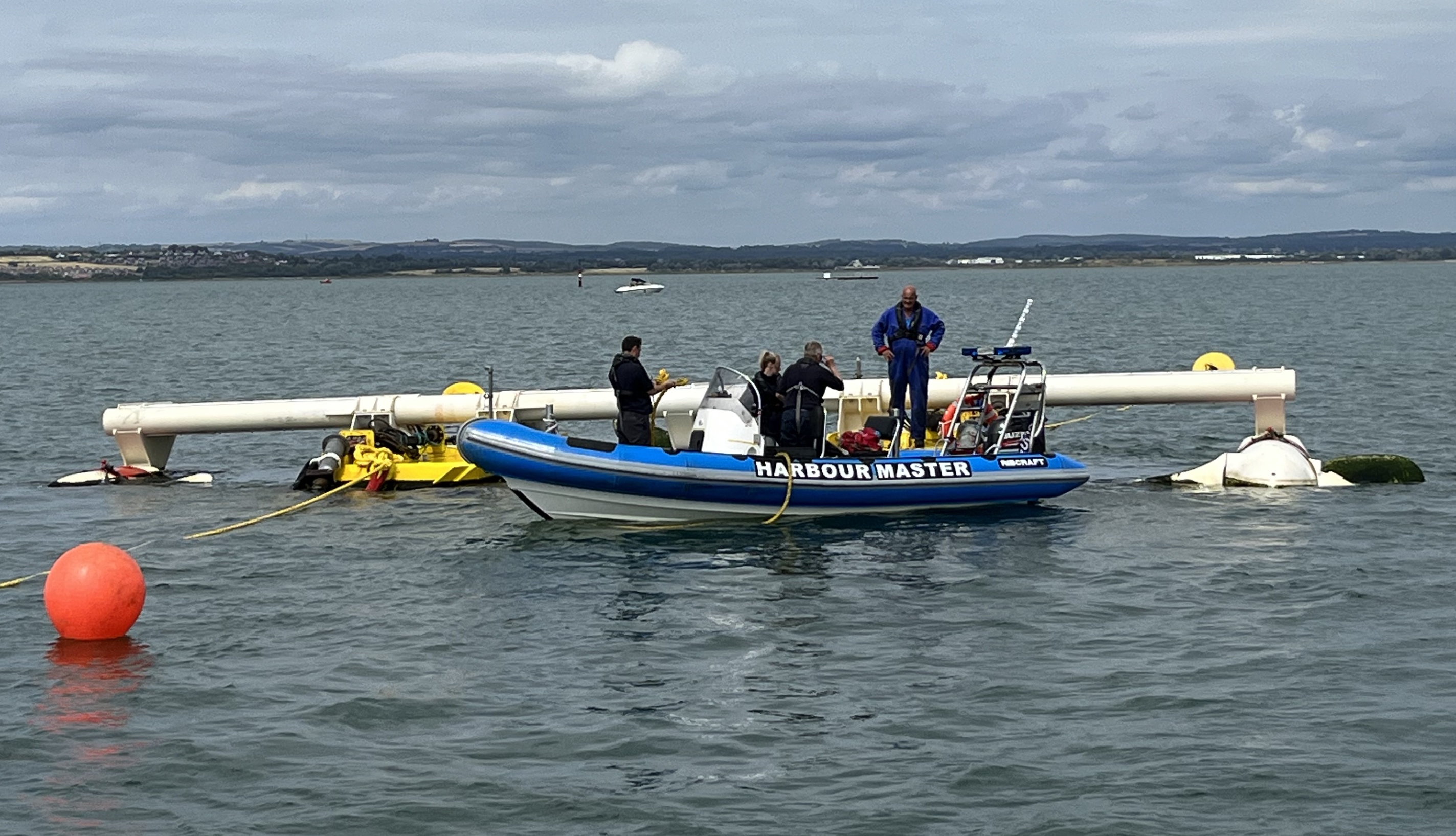
The Langstone Harbour Tidal Project is a temporary project which acts as an excellent training ground to commission and testing our tidal Subhub-CD platform along with our Tocardo T1 tidal turbines.
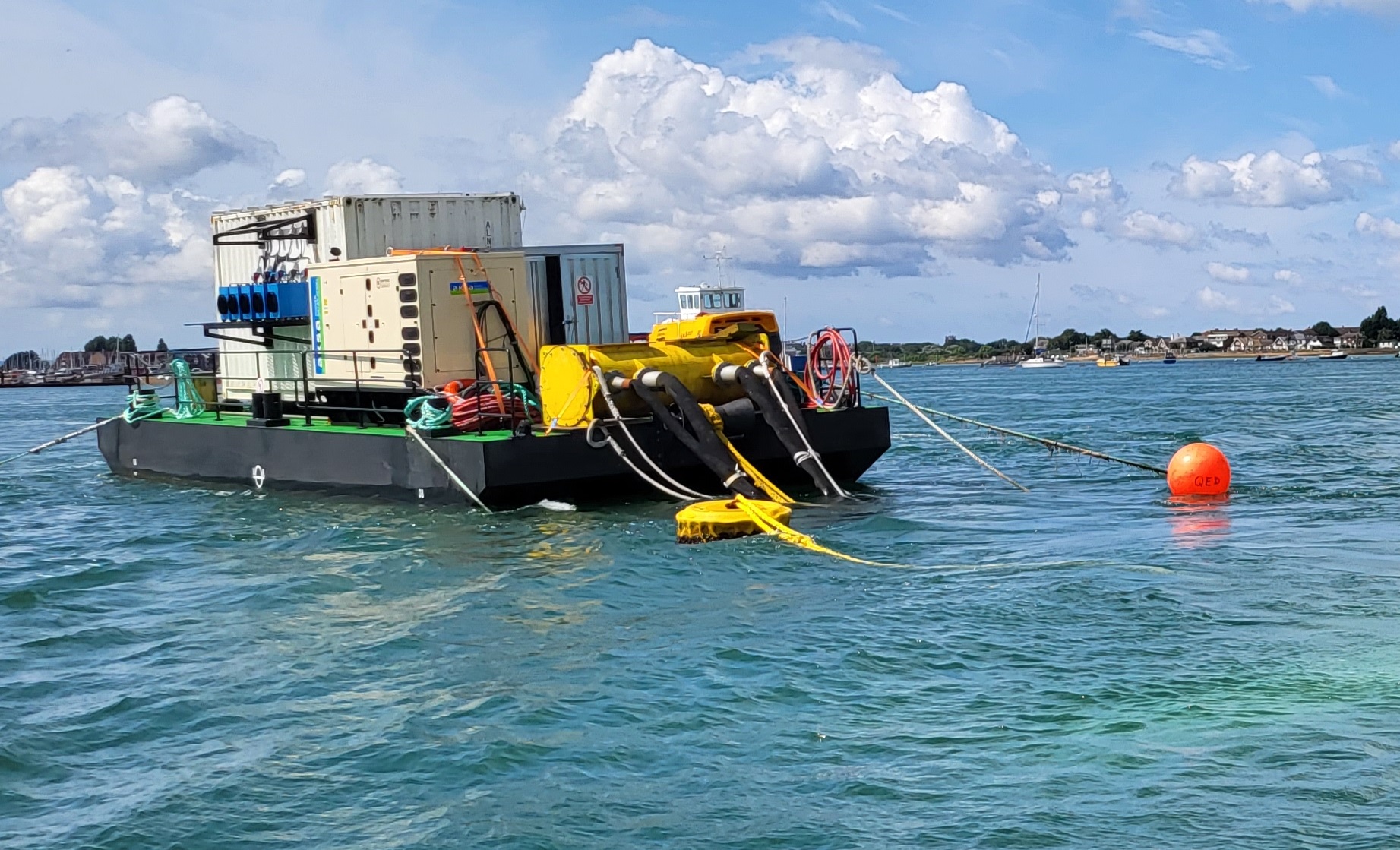
The tidal testing support barge called Trana, is used to simulated the grid along with grid load using its diesel generator and heaters. Also, all the power control systems that control the turbines are stored onboard the barge within the Turbine Control Centre (TCC) which also provides a comfortable working environment to operate the turbines.
Subhub-CD status is also controlled from the barge using the Subsea Manifold which is stored on the back deck of barge Trana along with the Ballast Control Centre (BCC). The BCC contains the pneumatic and hydraulic ballast systems which control the compressed air accumulators and regulators for de ballasting the Subhub, blowing the ballast tanks to empty them. It also contains the Hydraulic Power Unit (HPU) for controlling the state of the seawater inlet, and air vent valves.
The final critical component of the ballast system is the air compressor which is also kept on the rear deck of Barge Trana.
Our Operations at Langstone
Subhub’s Platform Management Sytem (SPMS)
Subhub's platform management system and digital twin control system development encapsulates 5 main data streams:
1) Platform data that monitors the status of the platform including the tank level and pressure sensors which double as depth sensors; it also includes leg strain gauges, and platform attides and orientation with heading data or angle of orientation. Finally, there are also Crossbeam strain gauges which informs the direct thrust and torque loads from the turbines.
2) Turbine SCADA system with the encoder being probably the most critical information required to understand the rpm of the rotor. There are varions temperature sensors throughout the generator and also measuring external water temperature. The majority of the data for the turbine actually comes from the power electronics reading voltages and currents and various stages through the power control process. There are G-sensors to check the accelerations due to environmental loading which are a good indicator of any damage or degredation in the turbines.Finally, there are a lot of boolean sensors for alarms such as oil and bilge levels.
3) Environment resource assessment data from ADCP flow measurement devices and wave height, turbulence levels, water temperature and salinity.
4) Environmental monitoring data for use in EIAs such as underwater cameras, hydrophones, and active sonar devices.
5) Cable management systems that check the temperatures of the cable along its length and position. Hydrophones are useful here to measure the amount of erosion.
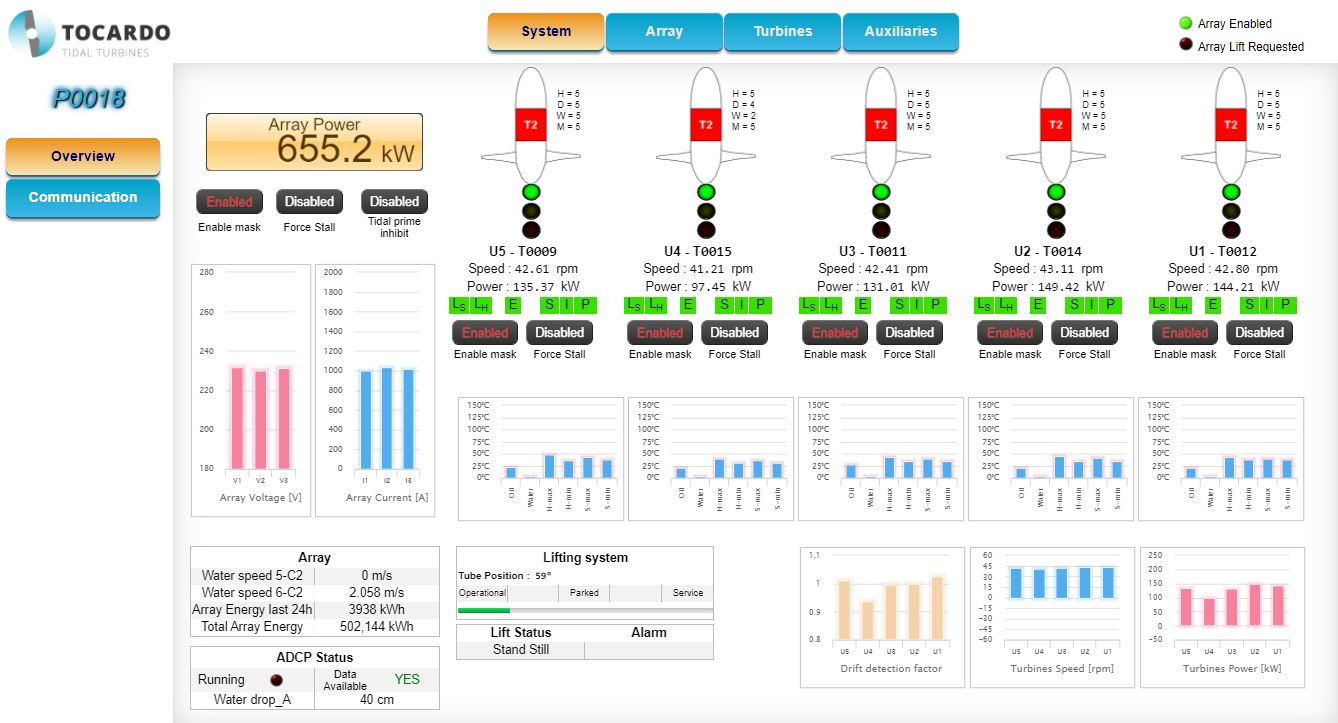
Subhub’s Digital Twin
Subhub’s digital twin (DT) has been developed to provide a fully integrated data set so that data can be readily access from all 5 data streams mention previously. This opens up the potential for cross platform validation of the data which reduces down time and alarms.
The QED DT is developed using a Matlab Simulink and Simscape modelling methods which is then hard coded into the PLCs onboard the turbines using Beckhoff’s TwinCat 3 program logic. This enables QED to use their baseline DT software, called Tidal 2 Wire, utilises the back end engineering models to predict the power output and dynamic loading on the plant. It has been enhanced to use data captured from the Oosterschelder Tidal Project (OTP) and trained to behave in the same way as the turbine using Machine Learning (ML).
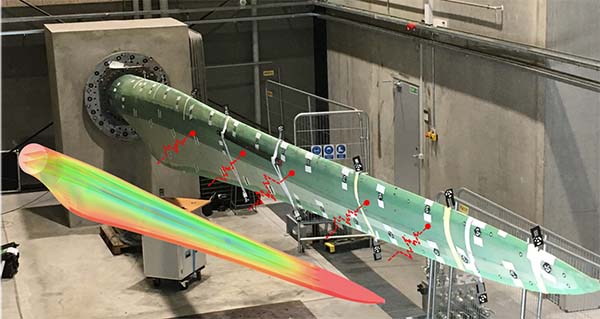
Datacentres are critical for monitoring through life issues of the plant
Both QED Naval (group lead and platform developer) and Tocardo (turbine developer) recognise the importance of through life health monitoring and predictive maintenance which our digital twin technology is focused on. The datacentre which is a MySQL database in central to operation of the DT because it is the source of all the data for the engineering models and the dashboards which help the users and engineers understand the status of the whole tidal plant and all the offshore assets.
Any questions?
We would love to hear from you.
Please don't hesitate to contact us if you have any questions about projects, our technology, or opportunities to work with us.
It has never been more important to make changes to our enrgy supply.
Our technology is ready to make a difference in the supply of sustainable renewable energy.